
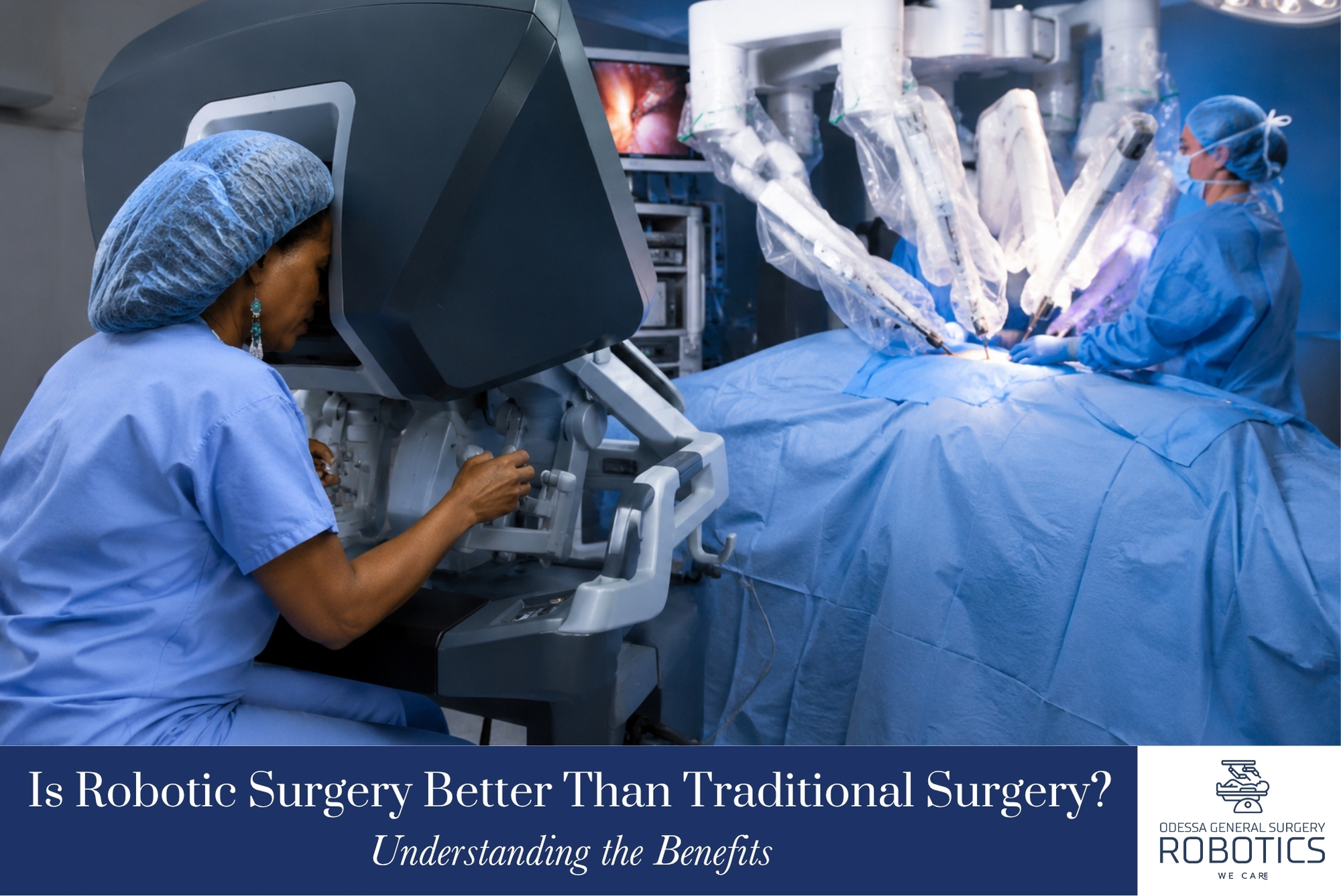
 When facing the possibility of surgery, one of the first questions many patients ask is whether robotic surgery is better than traditional surgery. While every procedure and every patient is unique, robotic-assisted surgery has transformed the way many operations are performed by offering greater precision, smaller incisions, and a faster recovery for appropriate candidates.
At Odessa General Surgery Robotics, patients benefit from advanced robotic surgical technology combined with the expertise of an experienced surgeon who carefully evaluates each individual’s condition and recommends the most effective treatment approach. Robotic-assisted procedures are designed to improve surgical accuracy while minimizing disruption to healthy tissue, helping many patients return to their daily lives sooner.
What Is Robotic-Assisted Surgery?
Robotic Surgery Is an Advanced Surgical Tool
Despite its name, robotic surgery does not mean a robot performs the operation independently. Instead, the surgeon remains in complete control throughout the procedure, using a sophisticated robotic system that translates hand movements into highly precise movements of miniature surgical instruments.
The robotic platform provides:
- High-definition, three-dimensional visualization
- Enhanced dexterity beyond the capabilities of the human wrist
- Tremor filtration for improved stability
- Exceptional precision in delicate surgical areas
- Improved access to difficult-to-reach anatomy
The surgeon directs every movement while viewing the operative field through magnified, detailed imaging that improves visibility during complex procedures.
Traditional Surgery vs. Robotic Surgery
Understanding the Primary Differences
Traditional open surgery typically requires a larger incision to allow direct access to the surgical site. While open surgery remains necessary for certain medical conditions, larger incisions often lead to increased tissue disruption and longer healing times.
Robotic-assisted surgery uses several very small incisions through which specialized instruments and a miniature camera are inserted.
Key differences often include:
| Traditional Surgery | Robotic Surgery |
| Larger incision | Small incisions |
| Greater tissue disruption | Minimally invasive approach |
| Longer hospital stay | Often shorter hospitalization |
| Increased postoperative discomfort | Reduced postoperative pain |
| Longer recovery period | Faster recovery for many patients |
| Larger scars | Smaller scars |
The most appropriate surgical method depends on the patient’s diagnosis, anatomy, overall health, and surgical goals.
Benefits of Robotic Surgery
Greater Surgical Precision
One of the most significant advantages of robotic-assisted surgery is precision.
The robotic system allows surgeons to make extremely controlled movements in confined spaces that would otherwise be difficult to access. The robotic instruments rotate with greater flexibility than the human wrist, allowing for meticulous tissue handling and accurate dissection.
This precision can be especially valuable during procedures involving delicate structures where preserving healthy tissue is important.
Smaller Incisions
Minimally Invasive Procedures Promote Better Healing
Rather than making one large incision, robotic surgery typically requires only several small openings.
Smaller incisions offer several advantages:
- Less trauma to muscles and surrounding tissues
- Reduced scarring
- Lower risk of wound complications
- Less blood loss during surgery
- Improved cosmetic outcomes
Many patients appreciate that smaller incisions not only improve healing but also provide greater comfort after surgery.
Less Pain After Surgery
Reduced Tissue Trauma Leads to Greater Comfort
Pain following surgery often results from tissue damage created during the operation. Since robotic-assisted procedures minimize disruption to surrounding tissues, many patients experience less postoperative discomfort compared to traditional open surgery.
Reduced pain can often lead to:
- Less reliance on prescription pain medications
- Earlier movement after surgery
- Improved breathing and mobility
- More comfortable recovery at home
Every patient’s pain experience differs, but minimally invasive techniques frequently contribute to a smoother recovery.
Faster Recovery
Returning to Normal Activities Sooner
One of the most appealing benefits of robotic-assisted surgery is the potential for faster healing.
Because the procedure is less invasive, patients often recover more quickly than those undergoing traditional open surgery.
Depending on the procedure performed, patients may experience:
- Shorter hospital stays
- Earlier return to walking
- Faster return to work
- Quicker resumption of normal daily activities
- Improved overall recovery experience
Recovery timelines vary depending on the type of surgery and each patient’s overall health, but minimally invasive procedures are often associated with shorter recovery periods.
Improved Visualization During Surgery
High-Definition 3D Imaging Enhances Accuracy
The robotic surgical system provides magnified, three-dimensional images that offer significantly greater detail than the naked eye.
Enhanced visualization helps surgeons:
- Identify important anatomical structures
- Improve precision during delicate procedures
- Better preserve nerves and blood vessels
- Perform complex operations with greater confidence
This advanced imaging technology contributes to safer and more accurate surgical performance.
Reduced Blood Loss
Smaller Incisions Can Improve Surgical Outcomes
Robotic surgery frequently results in less bleeding than traditional open procedures because of its minimally invasive nature and improved precision.
Reduced blood loss may decrease the need for blood transfusions and can contribute to a smoother recovery.
Lower Risk of Certain Complications
Minimally Invasive Surgery Can Reduce Surgical Risks
Although every surgical procedure carries some degree of risk, robotic-assisted surgery may reduce the likelihood of certain complications for appropriate patients.
Potential benefits include:
- Lower risk of wound infections
- Reduced chance of large incision complications
- Smaller scars
- Less postoperative swelling
- Quicker wound healing
Patients should discuss individual risks and benefits with their surgeon before any operation.
Common Procedures Performed Using Robotic Surgery
Many General Surgical Procedures Can Be Performed Robotically
Robotic-assisted technology is used in many areas of general surgery.
Depending on the patient’s condition, robotic surgery may be appropriate for:
- Hernia surgery
- Gallbladder surgery
- Colon surgery
- Bariatric surgery
- Gastric sleeve procedures
- Breast surgery
- Certain abdominal procedures
Each patient receives an individualized evaluation to determine the safest and most effective surgical approach.
Is Robotic Surgery Right for Everyone?
Every Patient Requires an Individualized Evaluation
While robotic surgery offers many advantages, it is not appropriate for every situation.
Factors that influence surgical planning include:
- Overall health
- Medical history
- Previous surgeries
- Body anatomy
- Severity of disease
- Type of procedure needed
Some patients achieve the best outcomes with robotic surgery, while others benefit more from traditional minimally invasive or open surgery.
A thorough consultation helps determine the ideal treatment plan.
Choosing an Experienced Robotic Surgeon Matters
Technology Is Only as Effective as the Surgeon Operating It
Although robotic systems provide remarkable technological advantages, successful outcomes ultimately depend on the surgeon’s training, experience, and clinical judgment.
Experienced robotic surgeons understand:
- Patient selection
- Advanced surgical planning
- Safe robotic techniques
- Management of complex cases
- When alternative surgical approaches are appropriate
Selecting a skilled robotic surgeon plays an important role in achieving optimal results.
The Future of General Surgery
Robotic Technology Continues to Improve Patient Care
Robotic-assisted surgery continues to expand as technology advances and surgical techniques evolve.
Modern robotic systems are helping surgeons perform increasingly complex procedures with greater precision while improving patient comfort and recovery.
For many patients, robotic surgery represents the next generation of minimally invasive care, combining surgical expertise with innovative technology to deliver excellent outcomes.
Frequently Asked Questions
Is robotic surgery safer than traditional surgery?
Both robotic and traditional surgery are considered safe when performed by experienced surgeons. Robotic surgery offers several advantages for appropriate patients, including enhanced precision, smaller incisions, and faster recovery.
Does the robot perform the surgery by itself?
No. The surgeon controls every movement of the robotic system throughout the entire procedure. The robot does not make independent decisions.
Does robotic surgery hurt less?
Many patients experience less postoperative pain because robotic surgery typically involves smaller incisions and less disruption of healthy tissue.
How long is recovery after robotic surgery?
Recovery varies depending on the procedure and the patient’s health. Many individuals return to normal activities sooner than after traditional open surgery.
Will I have a large scar?
Most robotic procedures require only several small incisions, resulting in significantly smaller scars compared to traditional open surgery.
Is robotic surgery covered by insurance?
Many insurance plans cover medically necessary robotic-assisted procedures. Coverage depends on your insurance provider and specific treatment plan.
What procedures can be performed robotically?
Common robotic procedures include hernia repair, gallbladder surgery, colon surgery, bariatric surgery, gastric sleeve surgery, breast surgery, and many other general surgical procedures.
Am I a candidate for robotic surgery?
The best way to determine candidacy is through a comprehensive consultation. Your surgeon will review your medical history, perform an evaluation, and recommend the most appropriate surgical approach.
Contact Information
Odessa General Surgery Robotics
540 W 5th St, Ste #400
Odessa, TX 79761
Phone: (432) 614-0026
Website: https://odessageneralsurgery.com
Appointments: https://healow.com/apps/provider/judith-birungi-3264179