
The colo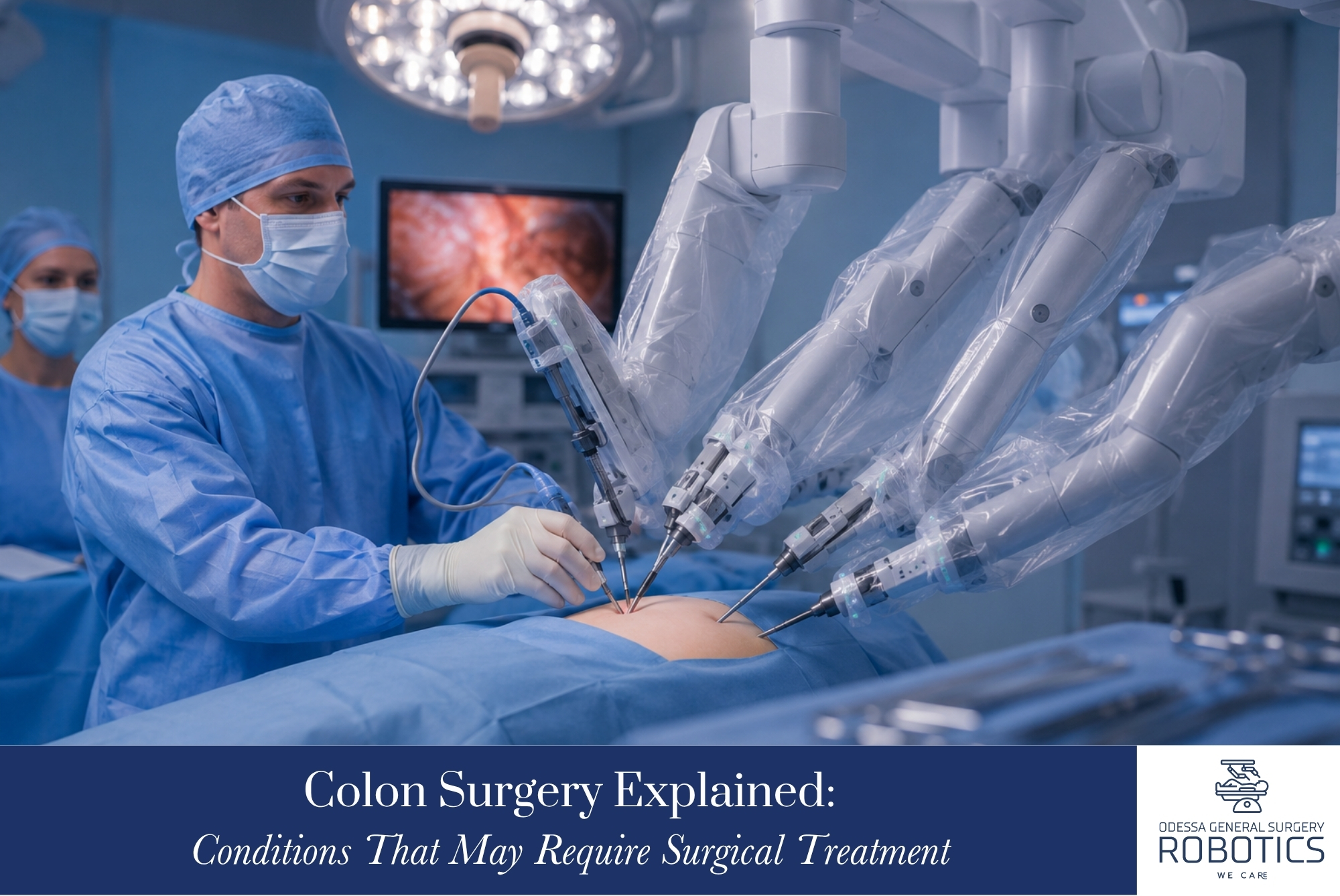 n, also known as the large intestine, plays an essential role in digestion by absorbing water and electrolytes while preparing waste for elimination. When diseases or structural abnormalities affect the colon, they can significantly impact overall health, quality of life, and even become life-threatening if left untreated. While many colon conditions respond well to medication, lifestyle changes, or minimally invasive procedures, some require surgical treatment to relieve symptoms, prevent complications, or remove diseased tissue.
At Odessa General Surgery Robotics, advanced robotic surgical technology allows patients to benefit from highly precise, minimally invasive procedures for many colon conditions. Understanding when colon surgery becomes necessary can help patients seek timely treatment and achieve better long-term outcomes.
Understanding Colon Surgery
Colon surgery, also called colectomy or colon resection, involves removing all or part of the colon affected by disease. Depending on the condition, the surgeon may remove a small segment or a larger portion of the colon before reconnecting the healthy ends whenever possible.
Advancements in robotic-assisted surgery have transformed colon procedures by improving surgical precision while minimizing trauma to surrounding tissues. Many patients experience shorter hospital stays, reduced pain, faster recovery, and smaller incisions compared to traditional open surgery.
Common Conditions That May Require Colon Surgery
Several medical conditions can damage the colon or increase the risk of serious complications. Surgical treatment becomes appropriate when conservative therapies no longer provide adequate relief or when the disease threatens a patient’s health.
Diverticulitis
Diverticulitis occurs when small pouches called diverticula develop in the colon wall and become inflamed or infected. Mild episodes often respond to antibiotics, dietary modifications, and rest. However, repeated infections or severe complications may require surgery.
Patients with diverticulitis may experience:
- Persistent abdominal pain
- Fever
- Nausea and vomiting
- Constipation or diarrhea
- Abdominal tenderness
- Abscess formation
- Perforation of the colon
Surgery is commonly recommended when diverticulitis causes recurrent infections, bowel perforation, fistulas, bowel obstruction, or bleeding that cannot be managed without surgery.
Colon Cancer
Colon cancer remains one of the most common cancers in the United States. Early detection through routine screening significantly improves outcomes, but surgery remains the primary treatment for most localized colon cancers.
Symptoms may include:
- Blood in the stool
- Persistent changes in bowel habits
- Unexplained weight loss
- Fatigue
- Abdominal discomfort
- Iron deficiency anemia
The goal of surgery is to completely remove the cancer along with nearby lymph nodes to reduce the risk of recurrence. Depending on the cancer stage, surgery may be combined with chemotherapy or other treatments.
Colon Polyps
Colon polyps are abnormal tissue growths that develop inside the lining of the colon. Although many polyps are benign, certain types have the potential to become cancerous over time.
Most polyps are removed during a colonoscopy. However, surgery may become necessary when:
- Polyps are too large for endoscopic removal.
- Multiple polyps are present.
- Cancer is suspected within a polyp.
- Patients have hereditary conditions such as familial adenomatous polyposis (FAP).
Removing precancerous polyps significantly lowers the risk of developing colon cancer.
Inflammatory Bowel Disease (IBD)
Inflammatory bowel disease includes both Crohn’s disease and ulcerative colitis. These chronic autoimmune disorders cause ongoing inflammation within the digestive tract.
While medications often control symptoms, surgery becomes appropriate when patients experience:
- Severe bleeding
- Perforation
- Bowel obstruction
- Toxic megacolon
- Colon cancer
- Failure of medical therapy
- Severe quality-of-life limitations
For ulcerative colitis, surgery can often eliminate the disease by removing the colon. Crohn’s disease surgery focuses on removing damaged sections while preserving as much healthy intestine as possible.
Colon Obstruction
A bowel obstruction blocks the normal movement of food and waste through the intestines. Obstructions can develop due to:
- Colon cancer
- Scar tissue
- Diverticulitis
- Hernias
- Twisting of the intestine (volvulus)
Symptoms often include:
- Severe abdominal pain
- Vomiting
- Abdominal swelling
- Constipation
- Inability to pass gas
Many bowel obstructions require emergency surgical intervention to prevent tissue death or perforation.
Colon Perforation
A perforated colon is a medical emergency. A hole in the colon allows intestinal contents to spill into the abdominal cavity, leading to severe infection known as peritonitis.
Causes may include:
- Diverticulitis
- Colon cancer
- Trauma
- Inflammatory bowel disease
- Colonoscopy complications
Emergency surgery removes damaged tissue, repairs the perforation, and cleans the abdominal cavity to prevent widespread infection.
What Is Robotic Colon Surgery?
Robotic-assisted colon surgery uses advanced surgical technology that allows the surgeon to control specialized instruments through several small incisions.
Despite the name, the robotic system does not perform surgery independently. Every movement remains completely under the surgeon’s control while providing enhanced visualization and instrument precision.
Robotic systems offer:
- High-definition three-dimensional visualization
- Greater dexterity than traditional laparoscopic instruments
- Improved precision during delicate dissections
- Better access in confined spaces within the pelvis
- Enhanced control around nerves and blood vessels
These advantages often translate into improved patient outcomes for many complex colon procedures.
Benefits of Robotic Colon Surgery
Patients undergoing robotic-assisted colon surgery often experience several important advantages.
Smaller Incisions
Small incisions reduce tissue damage and improve cosmetic outcomes while lowering the risk of wound complications.
Less Postoperative Pain
Minimally invasive techniques generally produce less discomfort compared to traditional open surgery, allowing patients to become mobile sooner.
Reduced Blood Loss
Greater surgical precision often minimizes bleeding during the procedure.
Lower Risk of Infection
Smaller incisions reduce exposure of internal tissues and decrease the likelihood of wound infections.
Faster Recovery
Many patients resume normal activities sooner because minimally invasive surgery creates less trauma to surrounding tissues.
Shorter Hospital Stay
Patients frequently leave the hospital earlier following robotic surgery than after open colon surgery, depending on their overall health and procedure complexity.
Preparing for Colon Surgery
Preparation depends on the condition being treated and the type of procedure planned.
Patients may undergo:
- Blood tests
- CT scans or MRI imaging
- Colonoscopy
- Electrocardiogram (EKG)
- Medical clearance
- Medication review
- Bowel preparation before surgery
Following all preoperative instructions helps improve safety and supports successful recovery.
Recovery After Colon Surgery
Recovery varies depending on the procedure and individual health. Most patients are encouraged to begin walking shortly after surgery to reduce complications such as blood clots and pneumonia.
Recovery generally includes:
- Gradual advancement of diet
- Pain management
- Walking several times daily
- Activity restrictions during healing
- Follow-up appointments
- Monitoring incision sites
Patients should immediately contact their surgeon if they develop fever, worsening pain, significant swelling, persistent vomiting, heavy bleeding, or drainage from the incision.
When Should You See a Surgeon?
Persistent digestive symptoms should never be ignored. Early evaluation often allows treatment before serious complications develop.
Schedule an evaluation if you experience:
- Blood in the stool
- Chronic abdominal pain
- Unexplained weight loss
- Persistent constipation or diarrhea
- Recurrent diverticulitis
- Colon polyps requiring surgical evaluation
- Newly diagnosed colon cancer
- Symptoms of bowel obstruction
Prompt diagnosis often leads to more treatment options and better outcomes.
Why Choose Odessa General Surgery Robotics?
Odessa General Surgery Robotics combines advanced robotic surgical technology with individualized patient care. Every treatment plan is tailored to each patient’s diagnosis, overall health, and long-term goals. From evaluating complex colon conditions to performing minimally invasive robotic procedures, the surgical team focuses on achieving excellent outcomes while supporting patients throughout every stage of treatment and recovery.
Whether you are managing diverticulitis, colon cancer, inflammatory bowel disease, or another colon condition, early consultation with an experienced robotic surgeon can help you understand your treatment options and make informed decisions about your health.
Frequently Asked Questions
What conditions commonly require colon surgery?
Colon surgery is commonly performed for colon cancer, recurrent diverticulitis, large or cancerous polyps, inflammatory bowel disease, bowel obstruction, perforation, and certain hereditary colon disorders.
Is robotic colon surgery safe?
Yes. Robotic-assisted colon surgery is a well-established technique performed by specially trained surgeons. It offers excellent precision while maintaining the surgeon’s complete control throughout the procedure.
How long does recovery take after robotic colon surgery?
Many patients return to light activities within two to four weeks, although complete recovery varies depending on the procedure performed and individual healing.
Will I need a colostomy bag after colon surgery?
Not every patient requires a colostomy. Many colon resections allow the healthy ends of the colon to be reconnected. If a temporary or permanent ostomy is necessary, your surgeon will discuss this before surgery whenever possible.
Is colon surgery painful?
Some discomfort is expected after surgery, but modern pain management techniques and minimally invasive robotic procedures help reduce postoperative pain.
Can diverticulitis return after surgery?
Removing the diseased section of the colon significantly reduces the likelihood of future diverticulitis in that area. However, maintaining a healthy lifestyle and following your physician’s recommendations remain important.
How is colon cancer diagnosed?
Diagnosis typically involves colonoscopy with biopsy, imaging studies, blood tests, and pathology evaluation to determine the stage and appropriate treatment.
Are all colon polyps cancerous?
No. Most colon polyps are benign, but certain types can become cancerous over time. Regular screening and removal help prevent colon cancer.
How long will I stay in the hospital?
Hospital stays vary depending on the procedure and individual recovery. Many patients undergoing robotic colon surgery return home within several days.
When should I seek immediate medical attention?
Seek emergency medical care if you develop severe abdominal pain, persistent vomiting, inability to pass stool or gas, heavy rectal bleeding, high fever, or signs of a bowel perforation.
Contact Information
Odessa General Surgery Robotics
540 W 5th St, Ste #400
Odessa, TX 79761
Phone: (432) 614-0026
Website: odessageneralsurgery.com
Appointments