
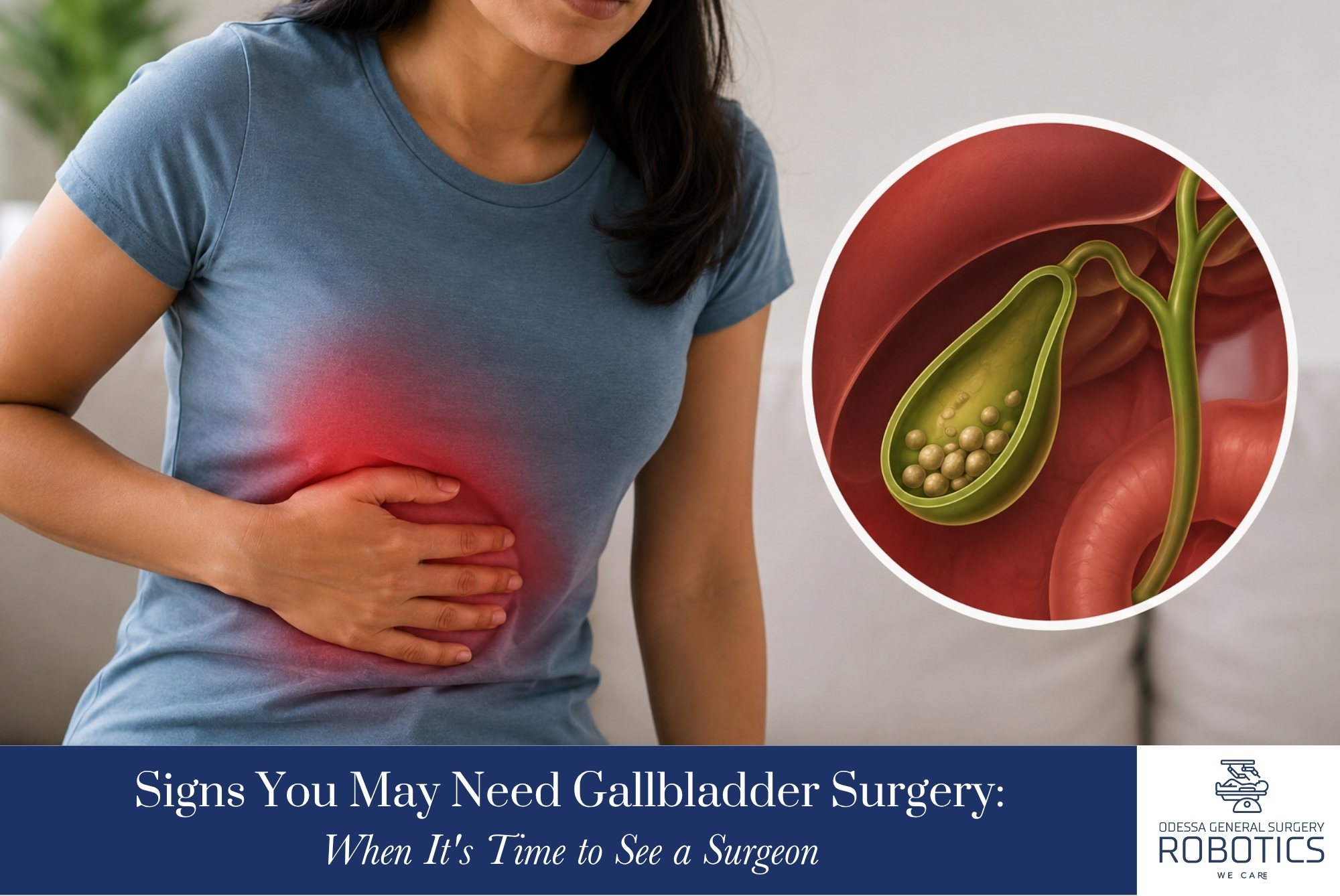
The gallbladder is a small organ located beneath the liver that plays an important role in digestion by storing and releasing bile. Although it is not essential for survival, a healthy gallbladder helps the body digest fats efficiently. When the gallbladder becomes diseased, however, it can cause severe pain, digestive problems, and potentially dangerous complications.
Gallbladder disease is one of the most common conditions treated by general surgeons. Gallstones, inflammation, infections, and blocked bile ducts can significantly impact your quality of life. Fortunately, advances in minimally invasive laparoscopic and robotic surgery have made gallbladder removal safer, more precise, and associated with faster recovery than ever before.
Understanding the warning signs of gallbladder disease and knowing when to seek surgical evaluation can help prevent serious complications while restoring comfort and digestive health.
Understanding the Gallbladder and Its Function
The gallbladder stores bile produced by the liver. After eating, especially foods high in fat, the gallbladder contracts and releases bile into the small intestine to aid digestion.
When the gallbladder does not function properly or gallstones block the normal flow of bile, inflammation develops. This often leads to painful symptoms that worsen over time if left untreated.
What Causes Gallbladder Problems?
Several conditions can affect the gallbladder, including:
- Gallstones (cholelithiasis)
- Gallbladder inflammation (cholecystitis)
- Gallbladder infection
- Biliary dyskinesia (poor gallbladder function)
- Blocked bile ducts
- Gallbladder polyps
- Rare gallbladder tumors
Gallstones are by far the most common reason patients require gallbladder surgery.
What Are Gallstones?
Gallstones are hardened deposits that form inside the gallbladder. They vary in size from tiny grains of sand to stones several centimeters in diameter.
Gallstones form when substances in bile become imbalanced, including:
- Excess cholesterol
- Excess bilirubin
- Poor gallbladder emptying
- Concentrated bile
Many people have gallstones without symptoms. Once stones begin causing pain or blockage, surgical removal of the gallbladder is usually recommended because symptoms often become more frequent and severe.
Common Signs You May Need Gallbladder Surgery
Several symptoms suggest that your gallbladder may no longer be functioning normally.
Persistent Pain in the Upper Right Abdomen
The most common symptom is pain beneath the right rib cage.
Patients often describe the pain as:
- Sharp
- Cramping
- Constant
- Pressure-like
- Severe
The discomfort frequently begins after eating and may last from several minutes to several hours.
Pain After Eating Fatty Foods
Meals containing fried foods, butter, cheese, creamy sauces, or fatty meats stimulate the gallbladder to contract.
If gallstones block bile flow, eating these foods can trigger intense pain known as a gallbladder attack.
Pain That Radiates to the Back or Shoulder
Gallbladder pain often spreads beyond the abdomen.
Many patients feel discomfort in:
- The right shoulder
- Between the shoulder blades
- The upper back
This referred pain is a classic symptom of gallbladder disease.
Nausea and Vomiting
Digestive symptoms commonly accompany gallbladder attacks.
Patients may experience:
- Nausea
- Vomiting
- Loss of appetite
- Feeling unusually full after meals
These symptoms often worsen after eating.
Frequent Indigestion
Gallbladder disease is frequently mistaken for acid reflux or indigestion.
Symptoms may include:
- Bloating
- Excessive gas
- Burping
- Heartburn-like discomfort
- Difficulty digesting fatty foods
When these symptoms repeatedly occur alongside upper abdominal pain, gallbladder disease should be considered.
Severe Gallbladder Attacks
A gallbladder attack usually begins suddenly.
Symptoms include:
- Intense upper abdominal pain
- Pain lasting longer than 30 minutes
- Sweating
- Nausea
- Vomiting
- Restlessness
Gallbladder attacks often occur at night or several hours after eating.
Fever or Chills
If pain is accompanied by fever or chills, infection may be developing.
Acute cholecystitis is a medical condition requiring prompt evaluation and frequently urgent surgery.
Yellowing of the Skin or Eyes
Jaundice develops when gallstones block the common bile duct.
Signs include:
- Yellow skin
- Yellow eyes
- Dark urine
- Pale stools
- Severe itching
These symptoms require immediate medical attention.
When Gallbladder Pain Becomes an Emergency
Seek emergency care immediately if you experience:
- Severe abdominal pain lasting several hours
- High fever
- Chills
- Yellow skin or eyes
- Persistent vomiting
- Confusion
- Difficulty breathing due to pain
Delaying treatment increases the risk of infection, bile duct obstruction, pancreatitis, or gallbladder rupture.
How Gallbladder Disease Is Diagnosed
Your surgeon begins with a comprehensive medical history and physical examination.
Diagnostic testing may include:
Ultrasound
Ultrasound is the first and most effective imaging test for detecting gallstones.
It can identify:
- Gallstones
- Gallbladder inflammation
- Thickened gallbladder walls
- Fluid surrounding the gallbladder
Blood Tests
Blood work helps detect:
- Infection
- Liver dysfunction
- Pancreatic inflammation
- Blocked bile ducts
HIDA Scan
A HIDA scan evaluates how well the gallbladder empties.
Patients with biliary dyskinesia may have normal ultrasounds but abnormal gallbladder function shown on this test.
CT Scan
CT imaging may be used to evaluate complications or rule out other abdominal conditions.
MRI or MRCP
Specialized MRI studies provide detailed images of the bile ducts and can identify stones causing obstruction.
When Is Gallbladder Surgery Recommended?
Surgery is typically recommended for patients with:
- Symptomatic gallstones
- Recurrent gallbladder attacks
- Acute or chronic gallbladder inflammation
- Gallbladder dysfunction
- Gallbladder polyps with concerning features
- Complications from gallstones
Removing the gallbladder eliminates the source of recurring symptoms and helps prevent future emergencies.
What Happens During Gallbladder Removal?
Gallbladder removal is called a cholecystectomy.
Most procedures are performed using minimally invasive techniques.
Laparoscopic Gallbladder Surgery
Laparoscopic surgery uses several tiny incisions through which a camera and specialized instruments are inserted.
Benefits include:
- Smaller incisions
- Less pain
- Reduced blood loss
- Faster recovery
- Minimal scarring
- Short hospital stay
Robotic Gallbladder Surgery
Robotic-assisted surgery builds upon minimally invasive techniques by giving the surgeon enhanced visualization and highly precise instrument control.
Potential advantages include:
- Exceptional surgical precision
- Enhanced visualization with high-definition 3D imaging
- Improved dexterity in confined spaces
- Smaller incisions
- Less postoperative discomfort
- Faster return to normal activities
- Excellent cosmetic results
At Odessa General Surgery Robotics, robotic technology allows surgeons to perform many gallbladder procedures with outstanding precision while prioritizing patient safety and recovery.
Life After Gallbladder Removal
Most patients recover quickly.
Immediately after surgery, patients are encouraged to:
- Walk frequently
- Stay hydrated
- Gradually return to normal eating
- Follow postoperative instructions carefully
Most people resume normal daily activities within one to two weeks following minimally invasive surgery, although recovery varies depending on the individual and the procedure performed.
The liver continues producing bile even without the gallbladder, allowing most patients to digest food normally after recovery.
Can Gallbladder Disease Be Prevented?
Not every case is preventable, but healthy habits may reduce risk.
Helpful strategies include:
- Maintaining a healthy weight
- Avoiding rapid weight loss
- Eating a high-fiber diet
- Limiting excessive saturated fat
- Exercising regularly
- Managing diabetes and cholesterol
Why Early Evaluation Matters
Many people ignore recurring abdominal pain until symptoms become unbearable. Unfortunately, gallbladder disease rarely improves once symptoms develop.
Early evaluation allows surgeons to diagnose the condition before serious complications occur. Modern laparoscopic and robotic techniques provide effective treatment with shorter recovery times and excellent long-term outcomes for most patients.
If you are experiencing repeated upper abdominal pain, digestive problems after meals, or suspected gallbladder attacks, consulting an experienced general surgeon can help you determine whether surgery is the most appropriate treatment.
Frequently Asked Questions
What does gallbladder pain feel like?
Gallbladder pain is usually located in the upper right abdomen and may feel sharp, steady, or cramping. It often develops after eating fatty foods and may spread to the back or right shoulder.
Can gallstones go away without surgery?
Most gallstones do not disappear on their own. Once gallstones begin causing symptoms, surgical removal of the gallbladder is generally the most effective long-term treatment.
Is gallbladder surgery safe?
Yes. Laparoscopic and robotic gallbladder removal are among the most commonly performed surgical procedures and have excellent safety records when performed by experienced surgeons.
How long does robotic gallbladder surgery take?
Most robotic gallbladder removal procedures take approximately one to two hours, depending on the complexity of the case and the patient’s anatomy.
Will I have to stay overnight?
Many patients return home the same day after minimally invasive gallbladder surgery, although some situations require a short hospital stay.
Can I live normally without my gallbladder?
Yes. The liver continues producing bile, allowing most people to digest food normally after recovery. Some patients notice temporary digestive changes that improve over time.
What foods should I avoid before surgery?
If gallstones are causing symptoms, limiting fried foods, fatty meats, butter, heavy dairy products, and greasy meals may reduce gallbladder attacks until surgery is performed.
How soon can I return to work?
Many patients return to desk work within one to two weeks after minimally invasive surgery. Jobs involving heavy lifting may require additional recovery time based on your surgeon’s recommendations.
Can gallbladder disease become dangerous?
Yes. Untreated gallbladder disease can lead to infection, blocked bile ducts, pancreatitis, gallbladder rupture, or other serious complications requiring emergency treatment.
How do I know if I need to see a surgeon?
If you experience recurring upper abdominal pain, gallbladder attacks, nausea after meals, or have been diagnosed with symptomatic gallstones, scheduling a surgical consultation is the best way to determine whether gallbladder removal is appropriate.
Contact Information
Odessa General Surgery Robotics
540 W 5th St, Ste #400
Odessa, TX 79761
Phone: (432) 614-0026
Website: https://odessageneralsurgery.com
Appointments: https://healow.com/apps/provider/judith-birungi-3264179