
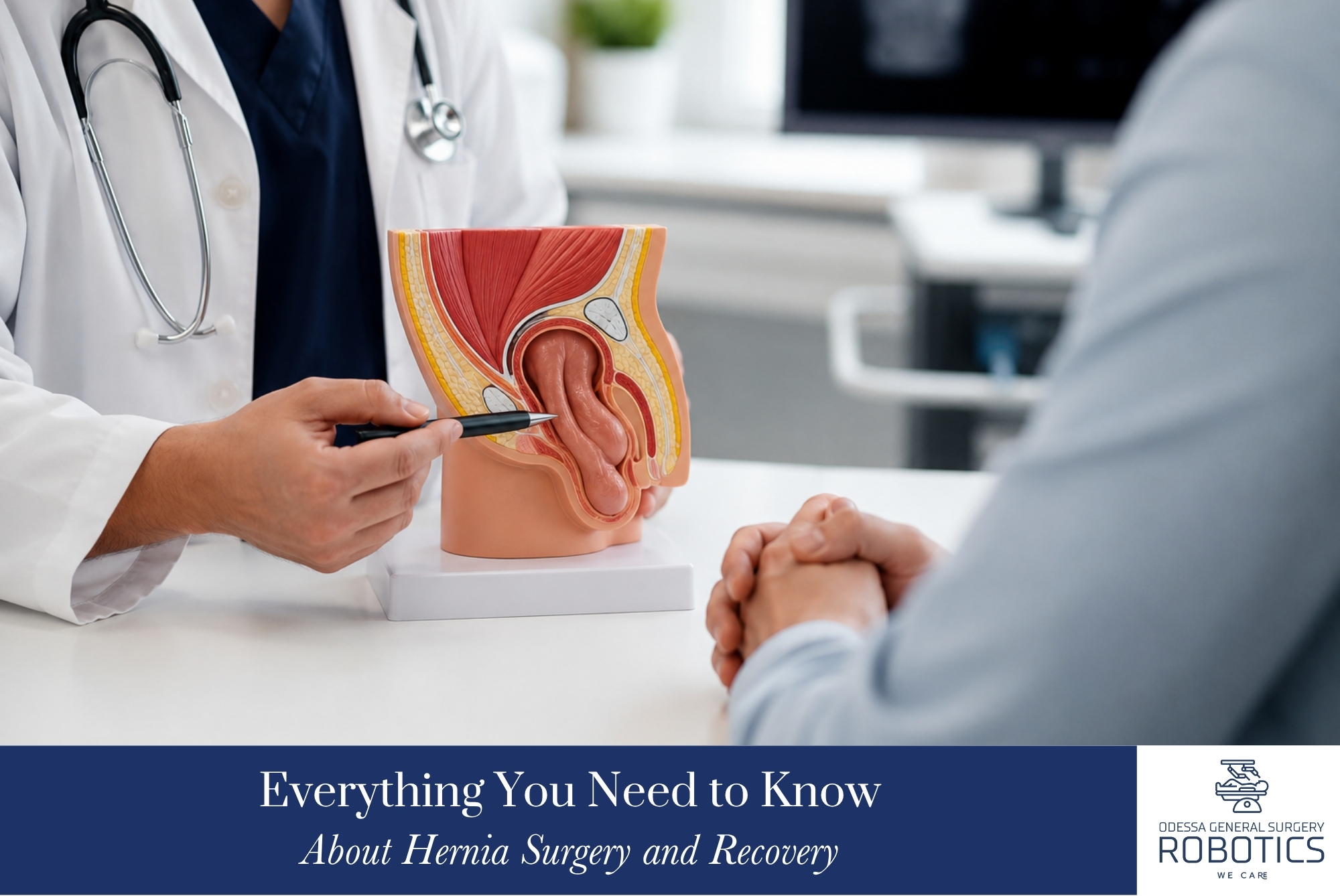
 A hernia is one of the most common surgical conditions affecting adults of all ages. While some hernias develop gradually with minimal discomfort, others can cause significant pain and lead to serious complications if left untreated. Fortunately, modern surgical techniques, including robotic-assisted hernia repair, have made treatment safer, less invasive, and associated with faster recovery times than many traditional procedures.
At Odessa General Surgery Robotics, patients receive advanced surgical care tailored to their individual needs. Whether you have recently been diagnosed with a hernia or have been living with one for years, understanding your treatment options and what to expect during recovery can help you make informed decisions about your health.
What Is a Hernia?
A hernia occurs when an internal organ or fatty tissue pushes through a weakened area of muscle or connective tissue. While hernias can develop anywhere in the body, they most commonly occur in the abdominal wall.
Hernias do not heal on their own. Over time, many continue to enlarge, increasing discomfort and the risk of complications. Surgical repair is the only definitive treatment.
Common Types of Hernias
Inguinal Hernia
An inguinal hernia develops in the groin and is the most common type of hernia, especially in men. It occurs when tissue protrudes through a weak spot in the lower abdominal wall or inguinal canal.
Symptoms often include:
- A visible groin bulge
- Pain when lifting, coughing, or exercising
- Burning or aching sensations
- Groin pressure or heaviness
Femoral Hernia
Femoral hernias occur slightly lower in the groin and are more common in women. Although less common than inguinal hernias, they have a higher risk of becoming incarcerated or strangulated.
Umbilical Hernia
Umbilical hernias develop near the belly button. While frequently seen in infants, adults can also develop umbilical hernias due to obesity, pregnancy, chronic coughing, or previous abdominal surgeries.
Incisional Hernia
An incisional hernia develops through a previous surgical incision after the abdominal wall has weakened. Patients who have undergone abdominal procedures have an increased risk of this type of hernia.
Hiatal Hernia
A hiatal hernia occurs when part of the stomach pushes through the diaphragm into the chest cavity. Unlike abdominal wall hernias, hiatal hernias often cause symptoms such as acid reflux, heartburn, or difficulty swallowing.
What Causes Hernias?
Several factors can weaken the abdominal wall or increase pressure inside the abdomen, including:
- Heavy lifting
- Obesity
- Pregnancy
- Chronic constipation
- Persistent coughing
- Aging
- Smoking
- Previous abdominal surgery
- Family history of hernias
Many patients have more than one contributing factor.
Signs That You Should See a Surgeon
Not every hernia causes severe pain initially, but delaying treatment can allow the hernia to enlarge.
Common warning signs include:
- A bulge that becomes more noticeable while standing
- Pain with physical activity
- Groin or abdominal discomfort
- Pressure or heaviness
- Increasing size of the hernia
- Difficulty performing daily activities
Immediate emergency care is necessary if a hernia becomes extremely painful, cannot be pushed back in, or is accompanied by nausea, vomiting, fever, or skin discoloration. These symptoms may indicate a strangulated hernia requiring urgent surgery.
Why Hernia Surgery Is Recommended
Unlike muscle strains or soft tissue injuries, hernias do not repair themselves. Without surgery, they often continue to enlarge.
Benefits of repairing a hernia include:
- Eliminating pain and discomfort
- Preventing enlargement
- Lowering the risk of incarceration
- Preventing strangulation
- Restoring normal abdominal wall strength
- Improving quality of life
Understanding Robotic Hernia Repair
Robotic-assisted surgery represents one of the most advanced approaches to hernia repair. At Odessa General Surgery Robotics, robotic technology allows surgeons to perform complex repairs with exceptional precision through small incisions.
During robotic surgery, the surgeon controls robotic instruments while viewing the surgical field through high-definition three-dimensional imaging.
The robotic system enhances the surgeon’s dexterity and visualization—it does not perform the surgery independently.
Advantages of Robotic Hernia Surgery
Smaller Incisions
Tiny incisions reduce tissue damage and typically result in less postoperative discomfort.
Greater Surgical Precision
The robotic platform provides enhanced visualization and precise instrument movement, allowing meticulous repair of weakened abdominal tissues.
Reduced Blood Loss
Minimally invasive techniques generally produce less bleeding during surgery.
Lower Risk of Infection
Smaller incisions reduce exposure and often decrease infection risk.
Faster Recovery
Many patients experience quicker recovery compared to traditional open surgery.
Less Postoperative Pain
Reduced tissue trauma often leads to decreased pain and fewer pain medications during recovery.
Earlier Return to Normal Activities
Patients frequently resume work, walking, and light activities sooner than with open procedures.
What Happens During Hernia Surgery?
Every operation is customized based on the location and size of the hernia.
Generally, surgery includes:
- Administration of anesthesia
- Small minimally invasive incisions
- Returning protruding tissue to its proper location
- Repairing the abdominal wall defect
- Reinforcing the repair with surgical mesh when appropriate
- Closing the incisions
Most robotic hernia procedures are performed on an outpatient basis, allowing patients to return home the same day.
What Is Surgical Mesh?
Surgical mesh is a medical device commonly used to reinforce weakened abdominal tissue after the hernia has been repaired.
Modern surgical mesh helps:
- Strengthen the abdominal wall
- Reduce tension on repaired tissues
- Lower recurrence rates
- Improve long-term durability
Not every hernia repair requires mesh, and your surgeon will discuss the most appropriate option for your specific condition.
Hernia Surgery Recovery Timeline
First 24 Hours
Patients typically experience:
- Mild soreness
- Fatigue
- Temporary swelling
- Minor bruising
Walking is encouraged shortly after surgery to improve circulation and reduce the risk of blood clots.
First Week
Most patients notice steady improvement.
During this period:
- Walking becomes easier
- Appetite returns
- Pain decreases significantly
- Daily activities become more comfortable
Many patients return to desk work within several days depending on the procedure and individual healing.
Two to Four Weeks
Most patients resume:
- Driving
- Light exercise
- Household activities
- Office work
- Shopping
Your surgeon will provide individualized activity recommendations.
Four to Six Weeks
Patients often return to more strenuous physical activities, including lifting, exercise, and sports after receiving clearance from their surgeon.
Healing continues beneath the surface even after patients feel well, making follow-up appointments extremely important.
Tips for a Smooth Recovery
Patients can support healing by:
- Walking several times daily
- Following lifting restrictions
- Eating a balanced, protein-rich diet
- Staying hydrated
- Preventing constipation
- Taking medications as directed
- Keeping incisions clean and dry
- Attending follow-up appointments
Preventing Hernia Recurrence
Although no surgery can eliminate all risk, patients can significantly reduce recurrence by adopting healthy habits.
Maintain a Healthy Weight
Excess body weight increases pressure on the abdominal wall.
Avoid Heavy Lifting Too Soon
Following postoperative lifting restrictions allows repaired tissues to heal properly.
Stop Smoking
Smoking impairs wound healing and weakens connective tissues.
Strengthen Core Muscles
After complete recovery and medical clearance, core strengthening exercises can improve abdominal support.
Treat Chronic Constipation
Reducing excessive straining protects the surgical repair.
Manage Chronic Cough
Persistent coughing increases abdominal pressure and may contribute to recurrence.
When Should You Call Your Surgeon?
Contact your surgical team immediately if you experience:
- Fever
- Increasing redness around the incision
- Drainage from the surgical site
- Severe abdominal pain
- Persistent vomiting
- Difficulty urinating
- Sudden swelling
- Recurrence of a bulge
Early evaluation can prevent more serious complications.
Why Choose Odessa General Surgery Robotics for Hernia Repair?
Patients deserve personalized surgical care using today’s most advanced technology. Odessa General Surgery Robotics offers comprehensive evaluation, advanced robotic-assisted procedures, and individualized recovery guidance designed to achieve excellent outcomes.
From diagnosis through recovery, patients receive compassionate care focused on restoring comfort, mobility, and long-term abdominal strength.
Frequently Asked Questions
Can a hernia heal without surgery?
No. Hernias do not heal on their own. Surgery is the only definitive treatment to repair the weakened abdominal wall.
Is robotic hernia surgery safe?
Yes. Robotic-assisted hernia repair is a well-established, minimally invasive surgical approach that offers excellent visualization, precision, and outcomes for many patients.
Will I have a large scar?
Most robotic procedures require only a few very small incisions, which generally result in minimal scarring.
How painful is hernia surgery?
Most patients experience mild to moderate soreness after surgery. Robotic techniques often reduce postoperative discomfort compared to traditional open surgery.
How long does recovery take?
Many patients return to normal daily activities within one to two weeks, while complete healing and return to unrestricted lifting often occurs after four to six weeks, depending on the individual procedure.
Can a hernia come back after surgery?
Although recurrence is possible, modern surgical techniques, appropriate use of mesh, and following postoperative instructions significantly reduce the likelihood of recurrence.
Is robotic surgery appropriate for every hernia?
Not every patient is a candidate for robotic repair. Your surgeon will recommend the safest and most effective surgical approach based on your hernia type, medical history, and overall health.
When should I seek emergency care for a hernia?
Seek immediate medical attention if your hernia becomes extremely painful, cannot be pushed back into place, or is associated with nausea, vomiting, fever, or skin discoloration.
Contact Information
Odessa General Surgery Robotics
540 W 5th St, Ste #400
Odessa, TX 79761
Phone: (432) 614-0026
Website: odessageneralsurgery.com
Appointments