
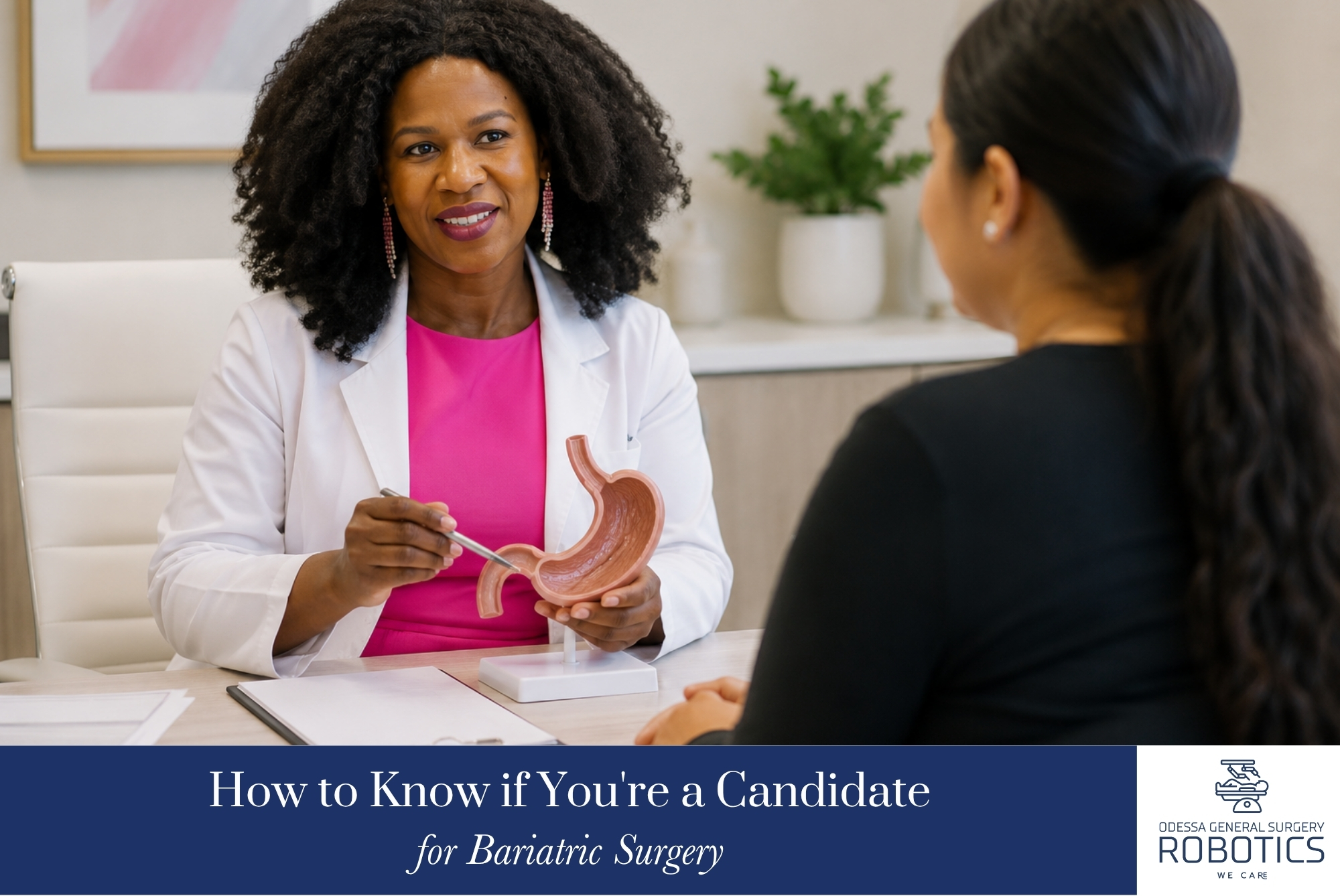
 Obesity is a chronic, complex medical condition that affects millions of people and significantly increases the risk of serious health complications. While healthy eating, regular exercise, behavioral changes, and medical weight loss programs can help many individuals achieve their goals, some patients continue to struggle despite their best efforts. For these individuals, bariatric surgery can provide a safe, effective, and long-term solution for meaningful weight loss and improved overall health.
At Odessa General Surgery Robotics, our experienced surgical team provides advanced bariatric procedures using minimally invasive robotic surgical techniques whenever appropriate. Understanding whether you are a candidate for bariatric surgery is the first step toward making an informed decision about your health and future.
What Is Bariatric Surgery?
Understanding Weight Loss Surgery
Bariatric surgery refers to surgical procedures designed to help individuals lose weight by altering the digestive system. These procedures reduce the amount of food the stomach can hold, change how the digestive tract absorbs nutrients, or both.
Rather than serving as a cosmetic procedure, bariatric surgery is recognized as an evidence-based treatment for severe obesity. It helps patients achieve significant weight loss while improving or resolving many obesity-related medical conditions.
Common bariatric procedures include:
- Gastric sleeve (sleeve gastrectomy)
- Gastric bypass
- Revisional bariatric surgery (when appropriate)
Each procedure has unique benefits, and the most appropriate option depends on a patient’s health history, weight loss goals, and medical needs.
Who Is Considered a Candidate for Bariatric Surgery?
Body Mass Index (BMI) Guidelines
One of the primary factors physicians consider is Body Mass Index (BMI), which estimates body fat based on height and weight.
General eligibility guidelines include:
- BMI of 40 or higher, regardless of additional medical conditions.
- BMI of 35 or higher with one or more obesity-related health conditions.
- In some situations, individuals with a BMI between 30 and 34.9 and significant metabolic disease, such as poorly controlled type 2 diabetes, may also qualify based on current medical guidelines and individual evaluation.
BMI alone does not determine candidacy. Surgeons also evaluate overall health, previous weight loss attempts, and readiness for long-term lifestyle changes.
Medical Conditions That May Qualify You
Obesity-Related Health Problems
Many patients become candidates because excess weight contributes to serious medical conditions that affect daily life and long-term health.
These conditions include:
- Type 2 diabetes
- High blood pressure
- High cholesterol
- Obstructive sleep apnea
- Heart disease
- Fatty liver disease
- Gastroesophageal reflux disease (GERD)
- Osteoarthritis
- Chronic joint pain
- Mobility limitations
- Polycystic ovary syndrome (PCOS)
- Infertility related to obesity
Successful weight loss often leads to substantial improvement or complete resolution of many of these conditions.
Previous Weight Loss Attempts Matter
Demonstrating Medical Necessity
Most bariatric surgery candidates have spent years trying to lose weight through:
- Diet programs
- Exercise plans
- Prescription weight loss medications
- Medical weight management
- Behavioral counseling
- Commercial weight loss programs
If these approaches have not produced lasting results, bariatric surgery may provide a more effective long-term solution.
Surgeons carefully review your weight history and previous efforts during the evaluation process.
Lifestyle Commitment Is Essential
Surgery Is a Tool—Not a Cure
Bariatric surgery works best when patients commit to permanent lifestyle changes.
Successful candidates understand the importance of:
- Following dietary recommendations
- Eating smaller portions
- Prioritizing protein intake
- Staying physically active
- Taking recommended vitamins and supplements
- Attending follow-up appointments
- Maintaining healthy habits for life
Patients who actively participate in their long-term care typically achieve the greatest success.
Psychological Readiness
Mental and Emotional Health Matter
Weight loss surgery requires both physical and emotional preparation.
Your surgical team may recommend a psychological evaluation to ensure you:
- Understand the procedure
- Have realistic expectations
- Can follow postoperative instructions
- Have appropriate emotional support
- Can successfully adapt to lifestyle changes
This evaluation is designed to support long-term success rather than prevent treatment.
Age Considerations
Is There an Age Limit?
Most bariatric surgery patients are adults between 18 and 65 years old. However, age alone does not automatically determine eligibility.
Some adolescents with severe obesity and serious health complications may qualify under specialized pediatric programs. Likewise, healthy older adults may also benefit after a comprehensive medical evaluation.
Overall health is typically more important than chronological age.
Medical Evaluation Before Surgery
What Happens During Your Consultation?
A comprehensive bariatric evaluation helps determine whether surgery is the safest and most effective option.
Your evaluation may include:
- Complete medical history
- Physical examination
- BMI calculation
- Blood work
- Cardiac evaluation
- Pulmonary assessment
- Nutritional counseling
- Psychological evaluation
- Review of current medications
- Discussion of previous weight loss efforts
This thorough process helps create an individualized treatment plan.
Understanding Insurance Coverage
Will Insurance Cover Bariatric Surgery?
Many health insurance plans cover bariatric surgery when specific medical criteria are met.
Insurance requirements often include:
- Meeting BMI guidelines
- Documented obesity-related health conditions
- Medical necessity documentation
- Participation in supervised weight loss programs (depending on the insurer)
- Nutritional counseling
- Psychological evaluation
- Preauthorization approval
Coverage varies by insurance provider and policy. Your bariatric team can help determine benefits and guide you through the approval process.
Benefits Beyond Weight Loss
Improving Overall Health
Bariatric surgery offers far more than weight reduction.
Many patients experience:
- Improved blood sugar control
- Lower blood pressure
- Reduced cholesterol levels
- Better sleep quality
- Relief from sleep apnea
- Increased mobility
- Reduced joint pain
- Improved fertility
- Increased energy
- Enhanced quality of life
- Reduced risk of cardiovascular disease
- Greater confidence and emotional well-being
These improvements often begin within weeks or months following surgery.
Robotic Bariatric Surgery
The Advantages of Robotic Technology
At Odessa General Surgery Robotics, many bariatric procedures can be performed using advanced robotic-assisted surgical technology.
Robotic surgery offers several potential advantages:
- Smaller incisions
- Greater surgical precision
- Enhanced visualization
- Less postoperative discomfort
- Reduced blood loss
- Lower risk of certain complications
- Shorter hospital stays
- Faster recovery for many patients
Your surgeon will determine whether robotic surgery is appropriate based on your individual needs.
Life After Bariatric Surgery
Long-Term Success Requires Ongoing Commitment
Weight loss surgery creates an opportunity for lasting health improvements, but maintaining results requires lifelong dedication.
Patients should continue:
- Regular exercise
- Healthy meal planning
- Protein-focused nutrition
- Adequate hydration
- Vitamin supplementation
- Routine medical follow-up
- Annual laboratory monitoring
- Support group participation when available
Many patients achieve sustained weight loss while enjoying a healthier, more active lifestyle.
Frequently Asked Questions
What BMI qualifies someone for bariatric surgery?
Generally, candidates have a BMI of 40 or higher, or a BMI of 35 or higher with obesity-related medical conditions. Some individuals with a BMI between 30 and 34.9 and significant metabolic disease may also qualify following a thorough evaluation.
Is bariatric surgery only for people who have failed dieting?
Most candidates have attempted multiple medically supervised or independent weight loss programs without achieving lasting success. Surgery provides an additional treatment option for chronic obesity.
Does insurance usually pay for bariatric surgery?
Many insurance plans provide coverage when medical necessity criteria are met. Coverage depends on your insurance provider and policy requirements.
How much weight can patients lose?
Weight loss varies depending on the procedure and individual commitment. Many gastric sleeve patients lose approximately 50% to 70% of their excess body weight within the first one to two years.
Is bariatric surgery safe?
Modern bariatric surgery is considered safe when performed by experienced surgeons. Robotic and minimally invasive techniques have further improved safety and recovery for many patients.
How long is recovery after bariatric surgery?
Many patients return to light daily activities within one to two weeks, although complete recovery and adjustment to dietary changes continue over several weeks.
Will I need to take vitamins forever?
Yes. Most bariatric procedures require lifelong vitamin and mineral supplementation to prevent nutritional deficiencies.
Can diabetes improve after bariatric surgery?
Many patients experience dramatic improvements in blood sugar control, and some achieve remission of type 2 diabetes following significant weight loss.
Can I become pregnant after bariatric surgery?
Many women experience improved fertility following weight loss. Pregnancy is generally delayed for 12 to 18 months after surgery to allow weight stabilization.
How do I know which bariatric procedure is right for me?
Your surgeon will evaluate your BMI, medical history, existing health conditions, weight loss goals, and lifestyle to recommend the most appropriate procedure.
Contact Information
Odessa General Surgery Robotics
540 W 5th St, Ste #400
Odessa, TX 79761
Phone: (432) 614-0026
Website: odessageneralsurgery.com
Appointments