
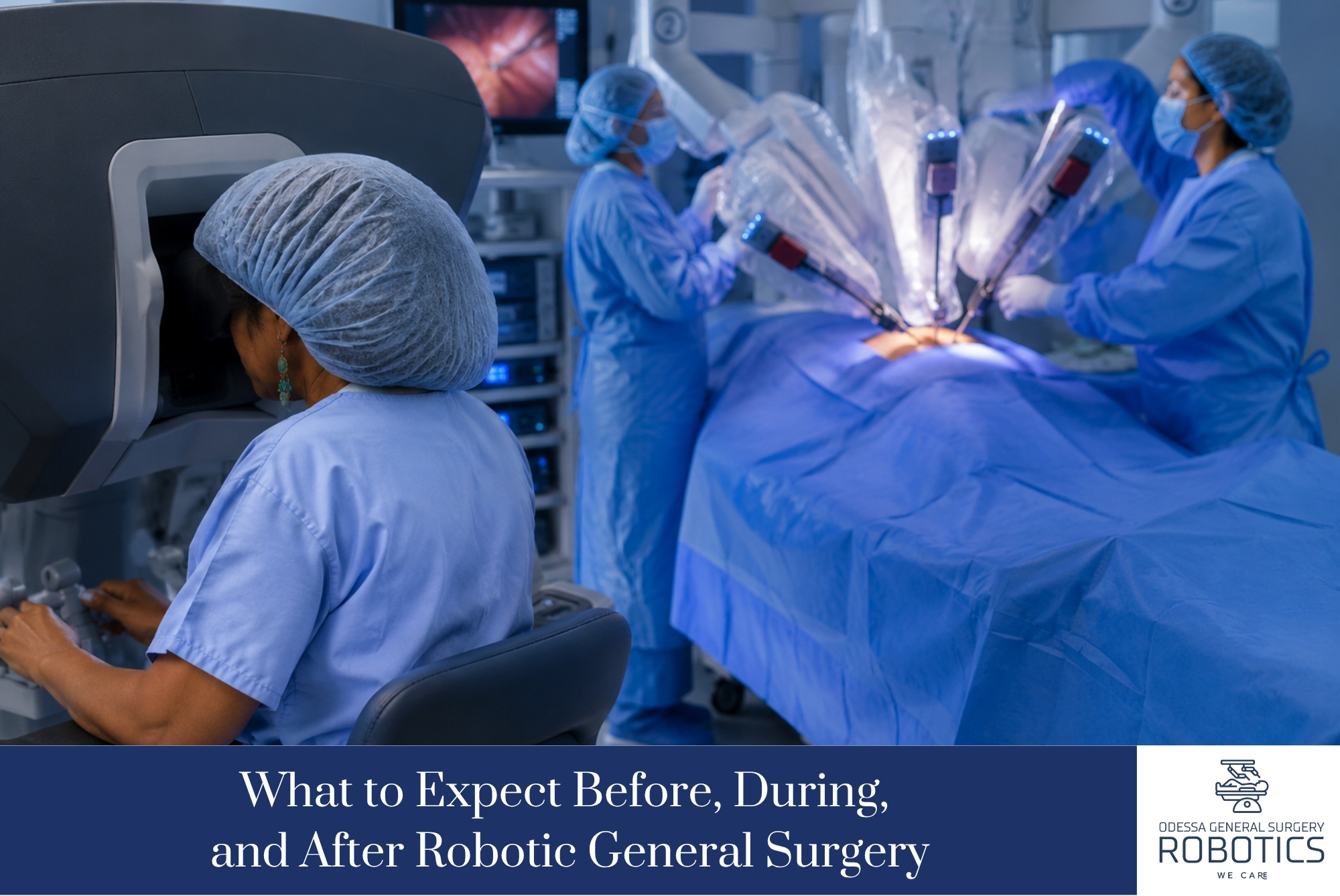
 Robotic general surgery has transformed the way many surgical procedures are performed, offering patients a minimally invasive option that combines advanced technology with the expertise of a highly trained surgeon. From hernia repair and gallbladder removal to colon surgery and bariatric procedures, robotic-assisted surgery is helping patients experience smaller incisions, greater surgical precision, reduced discomfort, and faster recovery compared to many traditional open surgeries.
If you have been told you need surgery, it’s natural to have questions about what the process involves. Understanding what happens before, during, and after robotic general surgery can help reduce anxiety and allow you to prepare with confidence. At Odessa General Surgery Robotics, patients receive personalized care from consultation through recovery, ensuring every step of the surgical journey is clearly explained and carefully managed.
Understanding Robotic General Surgery
What Is Robotic-Assisted Surgery?
Robotic-assisted surgery is an advanced form of minimally invasive surgery in which the surgeon controls specialized robotic instruments from a nearby console. Despite the name, the robotic system never operates independently. Every movement is directed by the surgeon in real time.
The robotic platform provides:
- High-definition three-dimensional visualization
- Wristed instruments with exceptional range of motion
- Enhanced surgical precision
- Improved access to difficult-to-reach anatomical structures
- Tremor filtration for greater control
These technological advantages help surgeons perform complex procedures with remarkable accuracy while minimizing trauma to surrounding tissues.
Common Procedures Performed Robotically
Robotic technology is commonly used for many general surgical procedures, including:
- Hernia repair
- Gallbladder removal (cholecystectomy)
- Colon surgery
- Bariatric surgery
- Gastric sleeve procedures
- Certain breast surgeries
- Selected abdominal procedures
Not every patient or condition is appropriate for robotic surgery, but many individuals benefit from this minimally invasive approach.
Before Surgery: Your Initial Consultation
Comprehensive Medical Evaluation
Your surgical journey begins with a detailed consultation. During this appointment, your surgeon will evaluate your condition, discuss your symptoms, review your medical history, and determine whether robotic surgery is the best treatment option.
The consultation typically includes:
- Review of previous imaging studies
- Physical examination
- Discussion of treatment options
- Explanation of surgical risks and benefits
- Review of medications
- Questions about allergies and prior surgeries
This evaluation helps create a personalized surgical plan designed specifically for your needs.
Diagnostic Testing
Depending on your condition, your surgeon may order additional testing before surgery, including:
- Blood work
- Electrocardiogram (EKG)
- Chest X-rays
- CT scans
- Ultrasound
- Colonoscopy
- MRI when appropriate
These tests help ensure surgery can be performed safely while providing valuable information for surgical planning.
Preparing for Robotic Surgery
Medication Adjustments
Certain medications may need to be stopped temporarily before surgery.
Examples include:
- Blood thinners
- Certain anti-inflammatory medications
- Some diabetes medications
- Specific supplements that increase bleeding risk
Never discontinue medications without first consulting your surgeon or prescribing physician.
Lifestyle Preparation
Several healthy habits can improve surgical outcomes.
Patients are often encouraged to:
- Stop smoking before surgery
- Stay physically active when possible
- Eat nutritious meals
- Maintain hydration
- Control chronic medical conditions
- Follow weight management recommendations
Even small improvements before surgery can support healing afterward.
Fasting Before Surgery
Most patients are instructed not to eat or drink for several hours before anesthesia. Your surgical team will provide specific instructions based on your scheduled procedure.
Following fasting instructions carefully helps reduce the risk of complications during anesthesia.
Planning for Recovery
Preparing your home before surgery makes recovery easier.
Helpful preparations include:
- Arranging transportation home
- Organizing medications
- Preparing easy meals
- Having comfortable clothing available
- Setting up a recovery area with necessities nearby
- Arranging assistance if needed during the first few days
The Day of Surgery
Hospital Check-In
Patients typically arrive several hours before their scheduled procedure.
During check-in, the healthcare team will:
- Confirm medical information
- Review medications
- Verify allergies
- Obtain consent forms
- Start an intravenous (IV) line
- Review the surgical plan
Every member of the surgical team works together to ensure patient safety before entering the operating room.
Meeting the Anesthesia Team
Before surgery, you’ll meet with an anesthesiologist or certified registered nurse anesthetist (CRNA).
They will discuss:
- Your health history
- Previous experiences with anesthesia
- Allergies
- Questions or concerns
- Pain management after surgery
Most robotic general surgeries are performed under general anesthesia, meaning you’ll be completely asleep throughout the procedure.
During Robotic General Surgery
Inside the Operating Room
Once anesthesia has taken effect, the surgical team prepares the surgical site using sterile techniques.
Several small incisions are made to insert:
- A miniature high-definition camera
- Robotic surgical instruments
- Specialized equipment for visualization
The surgeon remains in complete control of every instrument throughout the operation.
Precision Through Advanced Technology
The robotic system enhances the surgeon’s ability to perform delicate movements with exceptional accuracy.
Benefits often include:
- Smaller incisions
- Less disruption of healthy tissue
- Improved visualization
- Reduced blood loss
- Greater precision in confined surgical spaces
These advantages contribute to improved recovery for many patients.
Immediately After Surgery
Recovery Room Monitoring
Following surgery, patients are moved to the post-anesthesia care unit (PACU).
Nurses closely monitor:
- Blood pressure
- Heart rate
- Oxygen levels
- Pain control
- Incision sites
- Recovery from anesthesia
Most patients gradually awaken over the course of one to two hours.
Pain Management
Many robotic surgery patients experience less postoperative discomfort than individuals undergoing traditional open surgery.
Pain management may include:
- Oral medications
- IV medications initially
- Local anesthetics
- Non-opioid pain management strategies
Your healthcare team develops a pain control plan tailored to your individual needs.
Hospital Stay After Robotic Surgery
How Long Will You Stay?
Hospital stays vary depending on the procedure performed and your overall health.
Some robotic procedures allow patients to return home the same day, while others require an overnight stay or several days of observation.
Factors influencing hospital stay include:
- Type of surgery
- Medical history
- Pain control
- Return of normal bowel function
- Ability to walk safely
- Overall recovery progress
Your surgeon will discuss expected recovery time during your consultation.
Recovery at Home
The First Few Days
Once home, patients should focus on healing while gradually increasing activity.
Most people are encouraged to:
- Walk several times daily
- Drink plenty of fluids
- Eat balanced meals
- Get adequate rest
- Follow medication instructions carefully
Light movement helps reduce the risk of blood clots and promotes healing.
Caring for Your Incisions
Small robotic incisions generally heal quickly when properly cared for.
Patients should:
- Keep incisions clean and dry
- Watch for redness or drainage
- Avoid soaking in pools or bathtubs until cleared
- Follow all dressing instructions
Your surgical team will explain how to care for your incisions before discharge.
Returning to Normal Activities
Recovery varies based on the procedure performed.
Many patients return to desk work within one to two weeks, although physically demanding jobs may require additional healing time.
Your surgeon will provide individualized guidance regarding:
- Driving
- Exercise
- Lifting restrictions
- Returning to work
- Sports
- Travel
Following these recommendations reduces the risk of complications.
Follow-Up Appointments
Monitoring Your Healing
Follow-up visits allow your surgeon to:
- Examine your incisions
- Monitor healing
- Address questions
- Review pathology results if applicable
- Remove any sutures if necessary
- Discuss activity progression
These appointments are an important part of successful recovery.
Benefits of Robotic General Surgery
Why Many Patients Choose Robotic Surgery
Robotic-assisted procedures offer numerous potential advantages over traditional open surgery.
Benefits may include:
- Smaller incisions
- Less postoperative pain
- Reduced blood loss
- Lower infection risk
- Shorter hospital stays
- Faster recovery
- Less scarring
- Earlier return to normal activities
- Greater surgical precision
Individual outcomes depend on the patient’s health, the specific procedure performed, and adherence to postoperative instructions.
When to Contact Your Surgeon
Signs That Require Medical Attention
Although complications are uncommon, patients should contact their surgeon immediately if they experience:
- Fever
- Increasing redness around incisions
- Pus or significant drainage
- Severe pain not controlled with medication
- Persistent vomiting
- Chest pain
- Difficulty breathing
- Heavy bleeding
- Swelling that rapidly worsens
Prompt evaluation helps address concerns before they become more serious.
Choosing an Experienced Robotic Surgery Team
Why Expertise Matters
Successful robotic surgery depends not only on advanced technology but also on the experience and skill of the surgical team.
At Odessa General Surgery Robotics, patients receive individualized treatment plans, advanced minimally invasive surgical options, and compassionate care throughout every stage of treatment—from the initial consultation through recovery.
Understanding what to expect before, during, and after robotic surgery can help you feel informed and confident as you prepare for your procedure. With careful planning, expert surgical care, and close follow-up, robotic-assisted surgery offers many patients an effective path toward improved health and a smoother recovery.
Frequently Asked Questions
Is robotic surgery actually performed by a robot?
No. The surgeon controls every movement of the robotic system. The technology enhances precision but never makes decisions or performs surgery independently.
Am I awake during robotic surgery?
Most robotic general surgery procedures are performed under general anesthesia, so patients remain asleep throughout the operation.
How long does robotic surgery take?
Procedure times vary depending on the type and complexity of the surgery. Your surgeon will provide a more specific estimate during your consultation.
Is robotic surgery safer than traditional surgery?
Robotic surgery has been shown to be safe and effective for many procedures when performed by experienced surgeons. The most appropriate surgical approach depends on your medical condition and individual needs.
Will I have large scars?
Most robotic procedures use several small incisions rather than one large incision, often resulting in smaller scars after healing.
How soon can I return to work?
Recovery varies by procedure and occupation. Some patients return to office work within one to two weeks, while more physically demanding jobs may require additional recovery time.
Will I need someone to drive me home?
Yes. Patients receiving anesthesia should arrange for a responsible adult to drive them home after discharge.
What should I bring on the day of surgery?
Bring identification, insurance information, a list of medications, and any paperwork provided by your surgeon. Leave valuables at home unless instructed otherwise.
Can I eat after surgery?
Most patients begin with clear liquids and gradually return to a regular diet as tolerated. Your surgeon will provide specific dietary recommendations.
When should I call my surgeon after surgery?
Contact your surgical team if you develop fever, worsening pain, excessive bleeding, increasing redness, drainage from the incision, persistent nausea, chest pain, or difficulty breathing.
Contact Information
Odessa General Surgery Robotics
540 W 5th St, Ste #400
Odessa, TX 79761
Phone: (432) 614-0026
Website: odessageneralsurgery.com
Appointments