
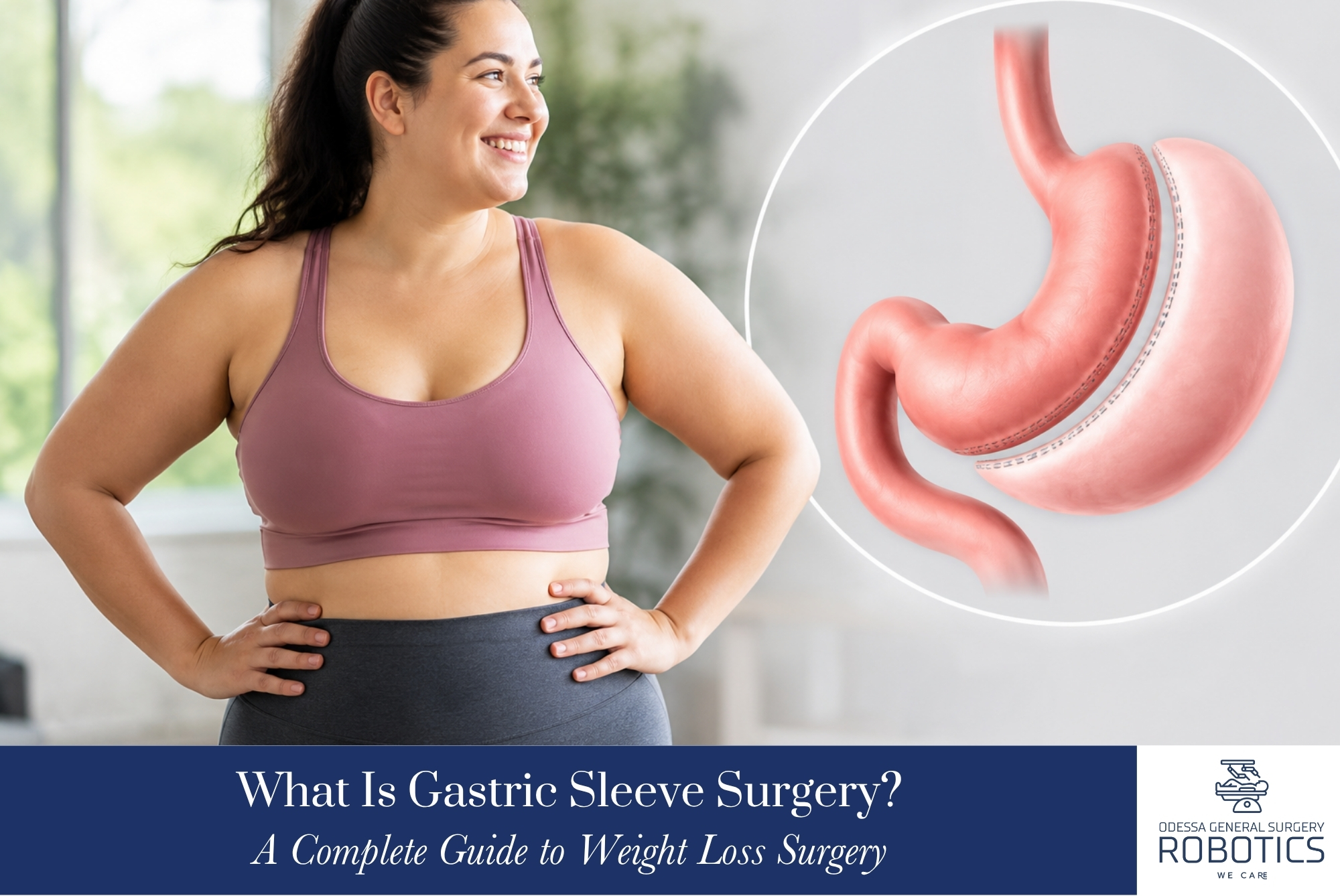
 For many people struggling with obesity, diet and exercise alone are not enough to achieve lasting weight loss. Obesity is a complex, chronic medical condition influenced by genetics, hormones, metabolism, lifestyle, and underlying health conditions. When traditional weight loss methods have been unsuccessful, bariatric surgery can provide an effective, medically proven solution.
Among the most commonly performed weight loss procedures today is gastric sleeve surgery, also known as sleeve gastrectomy. This procedure has helped millions of patients lose significant weight, improve obesity-related medical conditions, and regain a healthier, more active lifestyle.
At Odessa General Surgery Robotics, patients receive personalized bariatric care designed to improve long-term health while utilizing advanced minimally invasive and robotic surgical techniques whenever appropriate.
What Is Gastric Sleeve Surgery?
Understanding Sleeve Gastrectomy
Gastric sleeve surgery is a bariatric procedure that permanently reduces the size of the stomach. During surgery, approximately 75% to 80% of the stomach is removed, leaving behind a narrow, tube-shaped stomach that resembles a sleeve.
Because the stomach becomes much smaller, patients:
- Feel full after eating much smaller meals
- Consume fewer calories
- Experience reduced hunger
- Develop healthier eating habits over time
Unlike gastric bypass surgery, gastric sleeve surgery does not reroute the intestines. Food follows its normal digestive pathway, making the procedure technically simpler while still producing substantial weight loss.
How Gastric Sleeve Surgery Works
Smaller Stomach, Smaller Portions
After surgery, the stomach can hold only a fraction of the food it previously accommodated.
Patients naturally become satisfied with much smaller meals, making calorie reduction significantly easier without constant hunger.
Hormonal Changes That Reduce Hunger
One of the biggest advantages of sleeve gastrectomy is its effect on hunger hormones.
The portion of the stomach removed produces much of the body’s ghrelin, commonly called the “hunger hormone.” Because ghrelin production decreases after surgery, many patients notice:
- Less frequent hunger
- Reduced food cravings
- Improved appetite control
- Easier adherence to healthy eating habits
These hormonal changes help explain why gastric sleeve surgery is often more successful than dieting alone.
Who Is a Candidate for Gastric Sleeve Surgery?
Body Mass Index (BMI) Guidelines
Candidates generally include adults who have:
- A BMI of 40 or higher
- A BMI of 35 or higher with obesity-related health conditions
- A BMI between 30 and 34.9 in select cases when serious metabolic disease is present and surgery is medically appropriate
Obesity-Related Medical Conditions
Patients often qualify if obesity contributes to conditions such as:
- Type 2 diabetes
- High blood pressure
- Obstructive sleep apnea
- High cholesterol
- Fatty liver disease
- Arthritis
- Joint pain
- Heart disease
- Metabolic syndrome
Previous Weight Loss Attempts
Candidates have typically attempted medically supervised weight loss through:
- Diet modification
- Exercise
- Weight loss medications
- Nutrition counseling
- Lifestyle programs
When these approaches have not produced sustainable results, bariatric surgery becomes an effective treatment option.
Benefits of Gastric Sleeve Surgery
Significant Weight Loss
Most patients lose approximately 60% to 70% of their excess body weight within 12 to 18 months following surgery when combined with healthy lifestyle changes.
Weight loss continues gradually during the first year before stabilizing.
Improvement in Chronic Diseases
Many obesity-related conditions improve dramatically after surgery, including:
- Type 2 diabetes
- Hypertension
- Sleep apnea
- High cholesterol
- Acid reflux in select patients
- Joint pain
- Mobility limitations
Some patients even experience remission of diabetes shortly after surgery due to metabolic changes.
Better Quality of Life
Patients frequently report improvements in:
- Energy levels
- Mobility
- Confidence
- Physical activity
- Mental well-being
- Sleep quality
- Daily functioning
These benefits often extend well beyond the number on the scale.
How Gastric Sleeve Surgery Is Performed
Minimally Invasive Techniques
Most gastric sleeve procedures are performed laparoscopically or with robotic-assisted surgery.
Several very small incisions are made in the abdomen, allowing specialized instruments and a camera to complete the procedure with exceptional precision.
Compared to traditional open surgery, minimally invasive approaches generally offer:
- Smaller incisions
- Less postoperative pain
- Reduced blood loss
- Lower infection risk
- Faster recovery
- Minimal scarring
Preparing for Gastric Sleeve Surgery
Comprehensive Medical Evaluation
Before surgery, patients undergo a complete evaluation that may include:
- Medical history review
- Physical examination
- Blood testing
- Cardiac evaluation
- Nutritional assessment
- Psychological evaluation
- Imaging studies when necessary
The goal is to ensure surgery is both safe and appropriate.
Nutritional Education
Patients work closely with their bariatric team to learn:
- Portion control
- Protein goals
- Vitamin supplementation
- Hydration strategies
- Long-term dietary expectations
Education before surgery significantly improves long-term success.
Recovery After Gastric Sleeve Surgery
Hospital Stay
Most patients remain in the hospital for one to two days following surgery.
Walking soon after surgery helps reduce the risk of complications and promotes faster healing.
Diet Progression
Recovery involves several dietary stages.
Patients typically progress through:
- Clear liquids
- Full liquids
- Pureed foods
- Soft foods
- Regular healthy foods
This gradual progression allows the stomach to heal safely.
Returning to Daily Activities
Many patients return to office work within two to four weeks, although recovery varies depending on individual health and job requirements.
Heavy lifting should be avoided until cleared by the surgeon.
Expected Weight Loss Timeline
First Three Months
Patients often experience rapid weight loss during the first several months after surgery.
Six Months
Significant improvements in weight and obesity-related health conditions are commonly seen.
Twelve to Eighteen Months
Maximum weight loss is generally achieved between one and one-and-a-half years following surgery.
Long-term success depends on maintaining healthy eating habits, regular exercise, and ongoing follow-up care.
Lifestyle Changes After Surgery
Healthy Eating Habits
Successful patients commit to:
- High-protein meals
- Small portions
- Slow eating
- Drinking plenty of water
- Avoiding sugary beverages
- Limiting processed foods
Lifelong Vitamin Supplementation
Because food intake decreases substantially after surgery, patients require lifelong vitamin and mineral supplementation to prevent nutritional deficiencies.
These supplements commonly include:
- Multivitamins
- Calcium
- Vitamin D
- Vitamin B12
- Iron when appropriate
Regular laboratory monitoring helps ensure nutritional health.
Potential Risks of Gastric Sleeve Surgery
Understanding Surgical Risks
Every surgical procedure carries some degree of risk.
Potential complications include:
- Bleeding
- Infection
- Blood clots
- Staple line leak
- Narrowing of the stomach
- Acid reflux
- Vitamin deficiencies
Choosing an experienced surgical team and carefully following postoperative instructions significantly reduces these risks.
Long-Term Success After Gastric Sleeve Surgery
Surgery Is a Tool
Gastric sleeve surgery provides a powerful tool for weight loss, but long-term success depends on continued commitment.
Patients who experience the best outcomes consistently:
- Attend follow-up appointments
- Exercise regularly
- Eat balanced meals
- Maintain hydration
- Take prescribed supplements
- Seek ongoing nutritional guidance
With proper care, many patients maintain substantial weight loss for years.
Why Choose Odessa General Surgery Robotics for Bariatric Surgery?
Patients considering gastric sleeve surgery deserve personalized care from an experienced surgical team that understands both the medical and emotional aspects of obesity treatment.
At Odessa General Surgery Robotics, every patient receives individualized evaluation, comprehensive education, and ongoing support before, during, and after surgery. By combining advanced minimally invasive and robotic surgical techniques with compassionate care, the practice helps patients safely achieve meaningful, lasting improvements in their health and quality of life.
Frequently Asked Questions
How much weight can I lose after gastric sleeve surgery?
Most patients lose approximately 60% to 70% of their excess body weight within 12 to 18 months when they follow dietary guidelines, exercise regularly, and attend follow-up appointments.
Is gastric sleeve surgery permanent?
Yes. The portion of the stomach removed during surgery cannot be replaced, making the procedure permanent.
Will I feel hungry after surgery?
Most patients experience significantly reduced hunger because gastric sleeve surgery lowers production of the hormone ghrelin, which helps regulate appetite.
Can gastric sleeve surgery cure diabetes?
Many patients experience significant improvement or remission of Type 2 diabetes after surgery, especially when diabetes is diagnosed before extensive pancreatic damage occurs.
How long does gastric sleeve surgery take?
The procedure generally takes one to two hours, although surgical time varies depending on each patient’s medical history and anatomy.
Is robotic gastric sleeve surgery safe?
Robotic-assisted bariatric surgery is a safe and effective minimally invasive approach when performed by experienced surgeons. Robotic technology enhances precision and visualization during surgery.
Will I have loose skin after losing weight?
Some patients develop excess skin after substantial weight loss. The amount varies based on age, genetics, starting weight, and the amount of weight lost.
Can I become pregnant after gastric sleeve surgery?
Many women experience improved fertility after weight loss. Pregnancy is generally delayed for 12 to 18 months after surgery to allow weight stabilization and optimize maternal nutrition.
What foods can I eat after recovery?
Most patients eventually return to eating healthy solid foods that emphasize lean protein, vegetables, fruits, and whole grains while avoiding excessive sugar and highly processed foods.
How do I know if gastric sleeve surgery is right for me?
A consultation with a qualified bariatric surgeon includes a comprehensive medical evaluation, discussion of your weight loss goals, review of your medical history, and determination of whether gastric sleeve surgery is the best option for your health.
Contact Information
Odessa General Surgery Robotics
540 W 5th St, Ste #400
Odessa, TX 79761
Phone: (432) 614-0026
Website: odessageneralsurgery.com
Appointments